Lyrics Bleach Once Again Here We Are
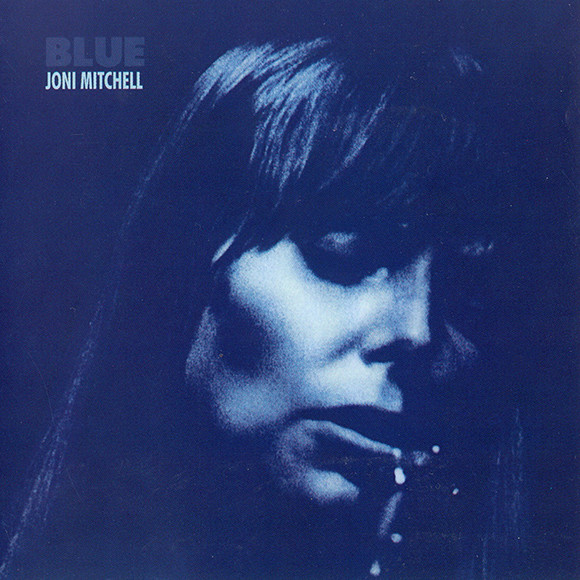
Commercial success didn't sit easy with Joni Mitchell. Clouds had gone gold and brought with it a level of popular appeal that took away some of her everyday liberties. Having finished Ladies Of The Coulee in 1970, she vowed to take a yr off, ostensibly to recharge her jaded batteries, but also to escape what she felt was an increasing sense of claustrophobia. "I was being isolated, starting to feel like a bird in a gilded cage," she explained to Rolling Stone'due south Larry LeBlanc. "A sure corporeality of success cuts y'all off in a lot of ways. You can't move freely. I like to alive, be on the streets, to be in a oversupply…"
In many ways, information technology signalled the start of Mitchell's conflicted human relationship between fine art and celebrity. At present that the "black limousine" and "velvet drape calls" of "For Gratis" had narrowed into the reality of her own life, she needed to regain her peripheral vision, restore a degree of clarity. Mitchell came to despise show concern, declaring fame "a serial of misunderstandings surrounding a name". Not for nothing did David Geffen one time tell her: "Yous're the only star I e'er met that wanted to be ordinary."
In that location were major upheavals in Mitchell's individual life, as well. Her intense love affair with Graham Nash, which had coincided with an accelerated spurt of productivity from both parties, was nearing its end, resulting in a series of picayune squabbles. Against this backdrop, Mitchell decided to head for Europe, where she travelled around Greece, Spain and France. Her main seat of exile was the island of Crete, where she took up residence in a cave amid a hippy customs in the fishing village of Matala. It was from here that she sent Nash a telegraph home. He was decorated laying a new floor in Mitchell'southward kitchen when it landed, it read: "If yous concord sand as well tightly in your hand, it volition run through your fingers. Beloved, Joan." "I knew at that point it was truly over betwixt united states," Nash recalled, disconsolately, in his memoir, Wild Tales.
Mitchell was introduced to the Appalachian dulcimer on Crete and adjusted to the unhurried rhythm of local life. The experience brought her into contact with a number of characters, who in turn helped reignite her creativity. One such figure was Cary Raditz, a wild-haired American chef who was blessed, in Mitchell'due south words, with "violent-looking blue eyes" and "the marker of Cain on his forehead". The pair began a relationship, sealed by a song she'd written in honour of his birthday: "Carey".
As more than musical ideas started to flow, Mitchell noticed the formation of certain recurring themes – love, loss, escape, a quest for some kind of indefinable spiritual truth. And for all the delicious scenery, food and gear up company, she was homesick. Shifting from 1 continental base to another just amplified the feeling. While in Paris, she poured her longing for her adopted West Coast into another fresh melody, "California".
She returned to her native Canada in late July, playing Toronto'south Mariposa Folk Festival aslope James Taylor. Mitchell and Taylor had met a year earlier, at the Newport Folk Festival, just now they became romantically involved. A month or so afterward, she visited him on the set of his Hollywood road movie, Two-Lane Blacktop, where they wrote together and, as Taylor told Uncut in 2015, "had some of the nearly outrageous good times". By October, they were sharing a phase at London's Paris Theatre, recorded for BBC Radio 1's In Concert series, with Mitchell unveiling a scattering of new compositions.
She returned to London at the end of November to perform at the Royal Festival Hall, where the new songs were met with unanimous approval past reviewers, among them the NME and Melody Maker. The latter's readership was similarly smitten with Mitchell, voting her 1970's Top Female Performer in its yr-end poll (alee of Aretha Franklin, Grace Slick, Sandy Denny and the recently departed Janis Joplin), despite her paucity of live shows.
Back home by early on '71, Mitchell and Taylor were viewed past the American music printing as Hollywood'south golden couple; ii young, photogenic singer-songwriters whose liaison embodied the free-spirited ambience of Laurel Canyon. Both set about preparing their respective solo albums, with Mitchell singing backing vocals on what would get Mud Slide Slim And The Blueish Horizon – virtually notably on his encompass of Carole King's "You've Got A Friend" – and Taylor repaying the compliment by adding guitar to "California", "All I Want" and "A Instance Of You". They also accustomed an invitation from King to appear on a reworked version of "Will Yous Love Me Tomorrow" for Tapestry, then being cut in the same A&M studio that Mitchell had booked.
The relationship quickly turned sour, notwithstanding. Apparently devastated by Taylor'southward conclusion to phone call it off, Mitchell funnelled her hurting into the other songs she was recording for the appositely named Blue. The album duly became a document of a life in flux, a diary of physical and emotional displacement fix confronting a backdrop of restless travel and doomed love affairs.
Brusque of the affectations of Clouds or the blusterous folk-pop of Ladies Of The Canyon, Blue was almost uncomfortably direct. Mitchell again refused to coat the songs in fussy arrangements, preferring to place her vox front and eye over spare guitar, dulcimer and pianoforte, her vulnerability plain for all to hear. She later told Rolling Rock that "at that period of my life, I had no personal defences. I felt like a cellophane wrapper on a pack of cigarettes. I felt like I had absolutely no secrets from the globe, and I couldn't pretend in my life to exist stiff. Or to exist happy. Only the advantage of it in the music was that there were no defences in that location either."
She was to use a more curious, semi-grotesque analogy in 2014'due south Joni Mitchell: In Her Ain Words, telling interviewer Malka Marom that she'd dreamed she was watching "a chip fat women'due south tuba ring. Women with large horns and rolled-downwardly nylon in house dresses, playing tuba and big horn music, and I was a plastic pocketbook with all my organs exposed, sobbing on an auditorium chair at that time. That's how I felt. Like my guts were on the outside. I wrote Blueish in that condition."
The implication here is that Blue is an unwavering litany of distress and despair, an inventory of misfortune with no light relief. But it's actually a counterweight of ecstasy and agony, of the best and worst of times. Nash is supposedly the subject of the piano-led "My Old Man", Mitchell riding the climatic extremes of romantic love in breathy soprano. "He'south my sunshine in the morning/He's my fireworks at the end of the day/He's the warmest chord I ever heard" she sings at her sunniest, her vox adopting the shifting cadences of jazz. It'due south in directly dissimilarity to the clouds that descend in his absenteeism: "But when he'due south gone/Me and them lonesome blues collide/The bed's too big/The frying pan'south also wide."
The exquisite "A Case Of You", also rumoured to be near Nash, finds her trying to absorb the lessons of a failed love thing that refuses to let her movement on. Equally if to measure the depth of its touch, Mitchell addresses her quandary in religious terms: "Oh, you're in my blood like holy wine/You gustatory modality so biting and and so sugariness." The sensitivity of her lyrics is echoed in the deft accompaniment of Taylor's acoustic guitar and in the poignant tones of Mitchell's dulcimer, the latter providing much of Blueish's graceful fragility. As testament to its enduring pull, "A Case Of You" became one of her most-covered tunes, siring versions from equally far afield as KD Lang, Nancy Wilson, James Blake, The Decemberists' Colin Meloy and Prince (as, naturally, "A Case Of U").
Of the trio of songs considered to exist inspired past Taylor, "All I Want" alludes to the jalousies and insecurities that appear to have undermined their relationship from an early stage. All Mitchell wants, she sings, her fluted voice rising and dipping over silvery dulcimer, "is to bring out the best in me and in yous too". But it feels like honest delusion rather than realistic promise. Her opening lines requite a truer indication of her emotional status: "I am on a lonely route and I am travelling/Travelling, travelling, travelling/Looking for something what tin it be/Oh I detest yous some, I hate you some, I love you some."
As she explained to Cameron Crowe some years later: "In the state that I was at in my research about life and direction and relationships, I perceived a lot of hate in my heart… I perceived my inability to dearest at that point. And information technology horrified me some."
The title rails follows a similar line of confession. A sombre lullaby that finds Mitchell lonely at the piano, the song appears to directly address Taylor's heroin habit – "Ink on a pin/Underneath the peel/An empty space to fill in" – while attempting to strike a annotation of optimism. Yet the prospect of self-destruction is too enticing to ignore out of mitt: "Everybody's maxim that hell'south the hippest way to go/Well I don't think so/Merely I'm gonna take a look effectually it though." Arguably the most affecting moment on the unabridged album occurs halfway through "Blueish", when Mitchell sings "lots of laughs" with such forlorn resignation that information technology'south well-nigh impossible not to well upwards.
Stephen Stills is on board for the more than sprightly "Carey", bringing a quasi-calypso rhythm to a tune that details Mitchell's sojourn in Matala. Despite revolving around her activities with Raditz – some other devilishly "mean old Daddy" to whom she's helplessly fatigued – it's essentially a conflicted piece of travelogue that contrasts the unproblematic hedonism of Cretan nightlife with homesickness for California. Mitchell can't seem to decide what she wants more than – the wine, laughter and scratchy rock 'n' roll of the Mermaid Café or the comforts of the Canyon. "Oh, you know it certain is hard to get out hither Carey/But it's really not my home," she declares, double-tracking herself on harmonies, with Russ Kunkel adding tactful percussion. "My fingernails are filthy, I got bleach tar on my feet/And I miss my clean white linen and my fancy French cologne." Raditz also features in the equally fidgety "California", in which Mitchell'south loneliness and dislocation are all besides apparent.
For all its thwarted romance and soul-stripping, it's this question that sits at the centre of Blueish. Mitchell is ultimately trying to reconcile her life with her art, compressing an elusive search for personal delectation into a grand artistic statement. Bluish is pitiful, funny, poetic, revelatory and oft achingly candid. And such an intensive feel that it feels much longer than it'due south relatively slight 35 minutes.
Issued in the summer of 1971, Blueish did brisk business concern both at home and abroad, swell the Billboard Top 20 and peaking in the UK Tiptop 3. It chop-chop became a landmark against which the work of all confessional vocalist-songwriters would be measured. Graham Nash says he still has a hard time listening to it. Mitchell herself has called it a turning signal in her career.
It was also the album that finally established the 27-year-quondam equally an American superstar. A situation that would in one case once again test her ambiguity towards her own fame.
- Rob Hughes
Source: https://jonimitchell.com/music/album.cfm?id=5

Postar um comentário for "Lyrics Bleach Once Again Here We Are"